Wednesday, August 10, 2011

Xbox Live Indie Games Is Broken, And Here's How Microsoft Can Fix It

When was the last time you downloaded something from Microsoft's Xbox Live Indie Games service? Have you ever? Do you even know where it's located in the Dashboard? Is this the first time you've thought about the service since it launched in February 2008?

I wouldn't blame you for being unaware of the Indie Games platform. It's buried so deep in the Xbox 360's Dashboard you'd need a GPS to find it. It's Microsoft's ugly stepchild, the one they keep in the basement when company is over. It's that thick, dusty encyclopedia on their bookshelf that they love to brag about, but never actually read.

So for those of you understandably unfamiliar with Xbox Live Indie Games, it's a way for someone like you or me to develop and sell our own Xbox 360 games using Microsoft's free XNA toolkit, with minimal certification. Just pay $100/year to join the "Creator's Club" and you're set.

Sounds like it should be a bastion of raw creativity, right? Well, not exactly.


"[Xbox Live Indie Games] has a bad reputation because there's no sort of quality control," Tommy Refenes of Super Meat Boy developer Team Meat told me over Skype. "Just a lot of shitty games for a dollar. People go, 'Well, I can safely ignore this entire channel because 90% of the games are just not good.'"

That lack of quality control is actually one of the biggest draws of the service for developers. Pay the fee, make your game, put it up, done. And in three years, there have been almost 2000 games released for the service. For comparison, there are about 400 games currently available on Xbox Live Arcade, Microsoft's premier download service that launched with the Xbox 360 in 2005.

For consumers, that's a nightmare.

"It's turning into the [iOS] App Store," said Edmund McMillen, the other half of Team Meat, in the same interview. "All the top games are Minecraft clones. It's becoming a joke just like the App Store."

He's not wrong. Take a quick glance at the best-selling games on the service and you'll find two Minecraft clones, two massage applications (they rumble your controller), a voice changer, and a charming little title called Baby Maker Extreme where you fire a newborn baby from its mother's uterus and make it bounce as far as you can.

Those are some of the best-selling Indie Games of all-time.

Mind you, there are some high-quality games on the service. Breath of Death VII and Cthulhu Saves the World, recently released on Steam, began life on Xbox Live Indie Games in 2010. Shortly after their Steam releases, developer Zeboyd Games announced on its blog that it had "already made more revenue in less than a week on Steam than we have in over a year and a half on the Xbox Live Indie Games service." Ouch.

I asked Robert Boyd, half of Zeboyd Games, whether he would consider PlayStation Network as an alternative to Indie Games: "Based on the huge success of our PC launch, we'll probably stick with the PC for the time being."

"I don't think anybody would be surprised by that," McMillen said of the disparity between Zeboyd's Steam and Indie Games sales, "because they weren't on Xbox Live Arcade. They were on Xbox Live Indie channel—"

"—which is promoted like absolute crap," finished Refenes.

I brought up the Summer Uprising program, a community-driven promotion designed "to promote Xbox Live Indie Games in the best light possible by showcasing the diversity, talent, and potential of the platform as a whole," according to its website.

"I had no idea it was up to the developers to make a Summer of Arcade-type situation and Microsoft basically doesn't do anything," said McMillen.

Summer Uprising, which will run from August 22 to September 2, is being organized by Dave Voyles and Kris Steele. They've already picked eight of a planned 10 games for release during the Uprising and are working hard to promote it with trailers, press releases and interviews.

"A lot of people look at the [Indie Games] platform as a joke, and a lot of it is," admitted Voyles in a Skype interview. "But there's a lot of talent, too. It's just not an intuitive marketplace."

Steele agreed, criticizing Microsoft's decision to have the Indie Games channel immediately dump players onto the list of newest games.

"Instead of gamers seeing the best we have to offer, or a selection of recent best," he said, "they see everything new, which isn't necessarily good. And when they find titles that aren't very good, they might assume that that's [all] we have to offer and they don't come back."

So then just sort it by user ratings, right? Wouldn't that solve that problem? Unfortunately, no. The rating system in Xbox Live Indie Games hasn't exactly been known for its purity in the past.

"All the top games are Minecraft clones. It's becoming a joke just like the App Store."
// Edmund McMillen

After several developers complained of being targeted for rating manipulation abuse, where some developers were asking fans to rate their own games highly and competing games poorly, Microsoft finally responded by changing the policy on how Indie Games could be rated so that "only users with Xbox LIVE Gold subscriptions will be allowed to rate content on the Xbox.com website."

However, it still doesn't require you to have actually played the game you're rating. Contrast that with PSN, where you can't rate any piece of content unless you have already downloaded it first.

So you're left with a platform flooded with bad games, completely ignored by Microsoft and the majority of Xbox 360 users, where the good games either can't sell or are unfairly rated by people who haven't even played them. It doesn't really make sense, does it?

I mean, Microsoft is offering something pretty unprecedented here: a chance for any gamer with a spark of inspiration to dip their toe into game development on a major gaming console. Neither Sony nor Nintendo offer that. Shouldn't Microsoft be singing their own praises every week, picking standout Indie Games from their community and saying, "This is what you can do on Xbox 360"? If nothing else, shouldn't Microsoft at least care about making extra money from Indie Games?

"Microsoft doesn't even care about money," McMillen countered. "They've got all the money. So they don't care about making money on anything. That doesn't matter. The only way Xbox Live Indie Games could be something they would get behind is if it was doing so many high numbers that they could get behind it. They don't need money. What they need is for people to say to their friends, 'Hey, Xbox Live is the biggest,' or, 'Hey, Xbox is the biggest because it's getting the most sales.' That's what matters. Sales numbers matter. They want to break previous records and they want to break other people's records."

Fair enough. But no Indie Game is going to break sales records unless somebody gets behind it and bellows from a mountaintop about why players should check it out. And that's where the Summer Uprising comes in.

When I spoke with Voyles and Steele, I could tell they "get it." These are guys that see potential in the Indie Games platform that even Microsoft can't, and they're not waiting around for Microsoft to finally recognize it, either.

"It's kind of like we're filling in Microsoft's role with the Uprising," Voyles said. He pointed to a recent post on Twitter by Epic Games' Vice President Mark Rein promoting an iOS game that uses Epic's Unreal Engine 3. "Why [Microsoft] wouldn't do that, I don't know."

Steele, who has published four games on the platform, said that the developers he's talked to have been requesting a more robust XNA toolkit from Microsoft that allows for Achievements, leaderboards and Kinect support to make their games more attractive to consumers. While there are obvious problems with allowing Achievements in user-created games, I was surprised to learn that leaderboards and Kinect support are still absent from the service. Steele thinks Windows Phone 7 might be to blame.

"Xbox Live Indie Games shares a lot of the same resources with Windows Phone 7, and that seems like it's more of a priority to Microsoft," he said, outlining some recent changes to XNA that seem more geared toward phone development.

While everyone I talked to had different theories why Microsoft hasn't thrown its weight behind Xbox Live Indie Games, they all pointed to Steam as the model for Microsoft to follow.

"It's hard to even talk about Steam," McMillen said. "There's nothing wrong with what they're doing. Everything's perfect. That's why things sell, because they have a little ad for even the most obscure indie game that goes up there."

But McMillen also makes a crucial distinction.

"The hardest part with Steam is actually getting your foot in the door," he said. "In order to get your foot in the door, you have to be legitimized in some way, shape or form." He goes back to Cthulhu Saves the World, saying that Zeboyd Games might not have gotten on Steam without proving themselves on Xbox Live Indie Games first. And sure enough, here's what Boyd told Armless Octopus in July:

To be honest, I don’t know that we could have even managed to convince Steam to distribute our games if we hadn’t been able to point at the positive reviews that the XBLIG version had gotten. [...] I think XBLIG is a great choice for new developers to gain experience and build a resume even if it might not be the best choice for actually making money.

"It's also important not to give anybody any false hope," McMillen said. "I'd say the majority of indie games that are out don't launch on Steam. Like VVVVVV. It came out months before, and [creator Terry Cavanagh] did it independently, and that's how he got on Steam."

Refenes agreed, saying that many indie developers are "expecting to do Castle Crashers numbers" with their first game.

McMillen added, "You're gonna have to go through those hoops in order to get to the places you want to get to regardless of any situation. If you're starting out and no one knows who you are, you're gonna have to pay your dues. And Xbox Live Indie Games is part of that."

One indie developer I talked to, Tristan Nishimoto, who recently released Rainbow Runner for Xbox Live Indie Games, completely understands.

"It sold about 500 in the first week," he told me in an email conversation. "I had absolutely no expectations, so I'm happy with how it's been selling." He said he doesn't plan to port Runner to Steam, but is aiming to launch his next game there.

"Xbox Live Indie Games is purposefully put up there for the 'in between,'" McMillen said. "They're pushing out of hobbyist and trying to push into making money for their game. It's a transitional area."

McMillen and Refenes made intriguing points about whether or not it should even be Microsoft's job to promote games on the service. Especially when you consider the difference in development costs between the XBLA games Microsoft does push and the Indie Games they don't, it almost seems unfair to expect Microsoft to do anything but make indie developers market their own titles.

Refenes explained, "They're giving developers a way to put stuff on a major console and they're doing a good job there and developers should see that as a gift, honestly."

"If you're starting out and no one knows who you are, you're gonna have to pay your dues. And Xbox Live Indie Games is part of that."
// Edmund McMillen

"I don't think that what they're doing is really wrong," McMillen said, "because they're not obligated to do anything. It's pretty cut and dry: 'You put your shit up here, and you get people to buy it.'"

Again, fair point. But if Microsoft wanted to get serious about Indie Games, how can they improve it?

"Promote it," McMillen said immediately. "But they're not going to."

"Well, it's two things," interjected Refenes. "They need to promote it, and they need to quality control it."

"Bam. There we go," McMillen agreed. "But that's the thing. They do have that already. It's called Xbox Live [Arcade]."

Voyles and Steele had a couple of their own suggestions to add.

"They really have to revamp the Dashboard," Voyles said. "So many things are hidden and convoluted... even the major titles."

Steele added, "There's also things they could do with the channel, like filtering the games within the Xbox Live Indie Games marketplace so it's easier to find the quality titles."

With all that in mind, I contacted Microsoft for a response to the criticisms and to see what their plans are for the platform going forward. Here's what they had to say:

Xbox LIVE Indie Games is designed to put the power in the hands of the developers. Microsoft provides a marketplace, free development tools and a peer-review system that makes it easy and affordable for developers to launch their games on Xbox LIVE. Microsoft is the only console maker that provides this level of support to independent developers. However, it’s not a case of “if you build it, they will come.” Just like any other studio that makes games for Xbox, independent developers must put marketing efforts into their games in order for them to be successful. Although we can’t share exact numbers of downloads, more than 1,400 games have been published on Xbox LIVE Indie Games to date.

Microsoft values and supports the independent development community. We are consistently listening to feedback from developers and are taking it into consideration for future programs. Since the launch of Xbox LIVE Indie Games in 2008, Microsoft has made several updates to improve the service for independent developers based on their feedback. Although we don’t have any announcements to make at this time, Microsoft will continue to make the desires of the independent community a priority for future updates to XNA Game Studio and Xbox LIVE Indie Games.

It's clear from that statement that it's Microsoft's intent that indie developers market their own games, which, to be fair, is both a vital learning experience and part of "paying your dues" like McMillen mentioned. It's a completely unrestricted, laissez-faire market where Microsoft has taken a giant step back and said, "This is your space to do with what you will. Go crazy."

So is Xbox Live Indie Games broken, or is it merely a case of mismanaged expectations on the part of developers and consumers? Well, it's both.

Xbox Live Indie Games truly is, as Microsoft put it, "designed to put the power in the hands of the developers." You can make your game for next to nothing, with no creative restrictions, and publish it for the world to play. It's just up to you to get them to play it. On a base level, the service delivers everything it sets out to do. But could it be better? Of course.

The key to "fixing" Xbox Live Indie Games is to put more power into the hands of the players: Don't allow games to be rated by people who haven't even downloaded them. Make the channel easier to find and easier to sift through, giving players ways to filter games that actually matter. While Microsoft won't (and shouldn't) enforce quality control, they need to give the community the tools to do it themselves.

If the Summer Uprising proves anything, it's that Xbox Live Indie Games, for all its flaws, still has a strong and dedicated community behind it. Microsoft needs to recognize that and show their support.

They also need to put more power in the hands of developers by giving them leaderboard and Kinect support (which could also help with the drought of Kinect software). And finally, while Microsoft doesn't need to promote every game on the service, or even most of them, is it really so hard to tweet about a cool game every once in awhile? Tycho from Penny Arcade recently posted on Twitter about a game called Pixel Blocked, saying, "People, Pixel Blocked on XBL Indie Games is just fucking killing it. I want this on every device I own." He currently has 53,429 followers. Microsoft's Xbox Director of Programming, Larry Hryb, also known as "Major Nelson," currently has 292,999 followers. Use that.

So yeah, Microsoft could be doing more to realize the potential of that service, but they're still the only ones even trying, and for that, they should be applauded.

"I'll tell you this," McMillen said. "If Xbox Live Indie Games was around when I started, I'd think that was the fucking coolest shit in the world."


Sunday, July 31, 2011

Review // inFAMOUS 2

No game is perfect, right? There's always something that could've been done better, regardless of the game you're talking about, even if it's just a minor flaw. Sometimes it comes down to personal taste or play style, but you can almost always say, "Yeah, that part of the game wasn't so great."

A prime example is the first inFAMOUS. I absolutely loved it. I've played through it at least three times, gotten every trophy, and came stupidly close to buying a second copy once it became downloadable on PlayStation Network. You know. In case I ever want to play it and don't have the disc with me. Yeah.

But you know what? Parts of inFAMOUS were just not very good. I wrote pretty extensively on its flaws back in 2009. The characters were unlikable, the moral choices were clumsy, and the game in general was a little buggy. And yet I still opened my review with, "inFAMOUS is a game that does so many things right that the things it does wrong cease to matter." I stand by that statement now just as much as I did when I wrote it. That game was fun.

That said, I expected inFAMOUS 2 to be bad. Really bad, actually. Why?

Well, every time Sucker Punch announced something new about it, like Cole's revised character design, his replacement voice actor, the inclusion of zombies with giant lobster claws for arms as enemies, or how the two latest women in Cole's life — Nix and Kuo — would represent the new moral choice system, I got the distinct impression that they were systematically trying to ruin their own franchise. One of my most anticipated sequels ever had turned into one of my most dreaded.

So you might be surprised when I tell you that inFAMOUS 2 is one of the most perfect games I have ever played.


Here's what I think happened: After inFAMOUS, Sucker Punch sat down and listed every single thing that they didn't like about that game and every single thing that fans didn't like, dead set on fixing every last complaint. Their gruff protagonist Cole turned out to be more polarizing than they had anticipated, so they overreacted, throwing out his original design and starting from scratch. They designed a trendier Cole, one created solely to be more likable. Ironically, all that accomplished was angering the fans who liked Cole in the first game (or at least didn't mind him) and forced Sucker Punch to publicly eat crow when they finally changed him back.

The result, however, was totally worth it. inFAMOUS 2 is exactly, and I mean exactly, what I wanted out of a sequel to the first game. It opens with more than just a bang; the stellar intro wastes no time, practically reaching through the screen to punch you in the teeth. You see, like Cole, now a seasoned hero/villain, Sucker Punch returns beyond confident. inFAMOUS 2 swaggers through its explosive opening, Round 1 of the match fans have waited two years to play: Cole MacGrath vs. "The Beast."

And just like that, in no more than 10 minutes, they've got you hooked.

What follows is an intensely charged race to juice up Cole's powers before the Beast can catch up to him, something inFAMOUS 2 never lets you forget. It periodically reminds you precisely how many miles away the Beast is and how many more "Blast Cores" our boy needs to absorb before he's ready to dance with the Devil again. The pause screen is especially effective, happily volunteering a map of the East Coast and just how much of it the Beast has already obliterated on his trip down to New Marais to say hi. Especially later in the game as the gap closes and you really start to wonder whether or not Cole can power up in time, this framing device proves sheer brilliance.

Every time the game reminded me how far away the Beast was, I could practically feel the guys at Sucker Punch grinning. They knew they had me, and they just wanted to make sure I knew it, too. Yeah, Sucker Punch, I knew. Go ahead and grin. You earned it.

They earned it by taking a witheringly hard look at the first game and recognizing not just what needed to be changed, but what needed to stay the same. At first, playing as Cole feels familiar but fun, as pleasantly surprising as driving your first car again for the first time in years and realizing it's still as nimble as ever. By the end of that game, though, Cole is capable of things you wouldn't believe.

That's what makes inFAMOUS 2 — and its predecessor — so special. Playing as Cole is pure, even refreshing. He's not bound by realism the way so many modern video game characters are. There's a rhythm to controlling him, that sought-after quality that makes the controller melt away and lets you really inhabit the character. It's why it's just as satisfying to keep Cole skating along the power lines above rooftops without falling as it is to to launch an electrically charged tornado at a helicopter.

Something that defined my time with the first inFAMOUS was that "just one more" feeling. You know the one. "Just one more mission." "Just one more collectable." I was constantly making deals with myself; deals that were always broken. I felt like an addict, and loved it. inFAMOUS 2 made me relapse, hard. Even after I collected every last "Blast Shard" in the city, I was still clicking in the left stick to search for more. It was a habit I simply couldn't shake, and a testament to how exceptional the game really is.

And also like the first game, right after I finished my first playthrough as a hero, I immediately restarted to play again as a villain. It was a truly cathartic experience to finally unleash after exercising such unyielding restraint for so long. Don't mistake that as an admission that playing the boy scout is boring, though. The inFAMOUS games encourage roleplaying in a way few can, managing to reward you for staying in character and punish you for straying without being overly judgmental or at the cost of having a good time. Switching sides is fun, but staying within the boundaries of your chosen role can be even more so.

But "no game is perfect, right?" Right.


Regarding the first inFAMOUS, I wrote that "playing as evil was a breath of fresh air. But not as much as I thought it would be." Well, for as far as they've come, Sucker Punch still struggles to make playing as evil a compelling, or even coherent, experience. Cole indecisively paces through cutscenes like a dog being called by two different masters at once, and the narrative suffers for it. I understand Sucker Punch's desire to wrack the player's conscience with two equally weighty decisions, but their current system doesn't allow for it. The game's need to label your actions as "good" or "evil," with no logical reason to deviate from your current path, cripples the potential emotional weight of any choice they could throw at you. Not that they even bother trying to present you with anything as beautifully agonizing as choosing whether to save your girlfriend or a team of doctors like they did in the first game, though.

That said, the evil path is still infinitely more affecting here than it was in inFAMOUS, largely thanks to the powerful ending that only works because of Sucker Punch's newfound ability to make characters actually worth caring about. It also helps that its conclusion is wildly different than the good path's, something inFAMOUS didn't even attempt.

inFAMOUS 2 is one of the finest games I've played in years. It's the kind of sequel that's so extraordinary, it makes you see flaws in the original that you didn't even know were there. It's the kind of game that reminds you why you play games in the first place. You'd be a fool not to play it.

inFAMOUS 2 / $59.99 / PS3


Monday, July 25, 2011

Review // Earth Defense Force: Insect Armageddon

Alone in the center of a desolate city. Skyscrapers loom from all sides, glowering downward. I feel small. There are plain, empty cars scattered on the street around us. Two men in futuristic armor stand near me, silent and waiting. No one else in sight. What happened here?

A small group of people tumble out of an alleyway a few blocks from us, their faces twisted in an unnatural expression that I guess is supposed to represent fear. They scramble along the road as dozens of grotesque, elephantine wolf spiders scuttle and pounce over the horizon behind them. Figures.

I'm having another nightmare about spiders.


Years ago, I'd have these every couple of weeks. A dream interrupted by an onslaught of feral spiders, all gnashing and spitting. I'd wake up, alone, sweating and shaking in the dark. And though I was awake, the dream would continue. Spiders would crawl from every shadow, forcing me to turn on the lights and leave the room. Eventually, I stopped sleeping there altogether, opting for the couch downstairs instead.

The two faceless men in armor rush forward, but I can't move. I thought I'd gotten over this fear. I did. But staring into the cold, unfeeling eyes of a wolf spider three times my size as it rears up and lunges towards me makes my stomach turn. I want to run away; I want to wake up.

But I can't, and instead, I realize that I'm holding a rocket launcher. I have my own futuristic suit. I can fly. As the spiders get closer, I hover above the street, out of their reach, and rain rockets down upon them. They flip and spin in the air, legs frozen, before disintegrating into nothingness. One catches on and climbs the skyscraper next to me. I notice just before it can spring off and knock me out of the air. I panic, firing blindly, wildly. The building crumbles, and the spider falls. I feel like a god. This is no nightmare. This is catharsis.

A voice crackles into my ear — something about "saving the world" or whatever. This isn't about "saving the world." It's about saving myself. So I drown it out with a-ha's "Take On Me." It colors everything differently; there's no terror here anymore, just a brilliant, rotoscoped power fantasy. I'm smiling, even laughing, as I confront an adolescent fear. I'm flying, soaring, ripping apart buildings with reckless abandon and a childlike sense of wonder, tearing down any semblance of structure or civilization around me.

No one is telling me to be more careful, or stop. Or maybe they are, and I'm just not listening. I don't care.

I slaughter wave after wave of these spiders until there's nothing left but my two interchangeable allies. We press forward, into a cheap facsimile of a neighborhood. No one has ever lived here; it's nothing more than a cardboard arena meant to be destroyed. Huge, mechanical ants swarm us. UFOs zoom overhead, lasers firing wantonly. An enormous spider spewing acid from its swollen, bright orange abdomen crashes through a house. A 50-foot robot stomps ferociously through the street, striding through buildings with ease. My dream has become a 1950s-era sci-fi flick.

I switch to "Blood Sugar" by Pendulum.


Everything shifts again, just as radically as before. It's not silly or light-hearted anymore. It's manic, a frenzied double shot of adrenaline to the heart. The pounding beat acts as an electrifying war drum, commanding me to fly faster and farther, and shoot with an urgency I hadn't felt before. It's intoxicating.

And yet, now I find myself getting bored with how repetitive everything is — the same objective over and over, the same environments over and over, the same enemies over and over. I find myself getting frustrated by how my weapons reload; for whatever reason, they share energy with my jetpack, so I'm often left both unable to fly or reload for long periods of time. I find myself wishing I could tell how much life the bigger enemies have left as they can take forever to kill.

Everything keeps ramping up. At first, the piling on of bigger enemies is just annoying, but soon we reach a point where there's so much going on that I can barely keep up. Now it's absurd and awesome and dumb in the best possible sense. And then it all ends in the most anticlimactic way imaginable.

It was like being woken up by the world's most inopportune alarm clock and getting cheated out of a real ending. Earth Defense Force: Insect Armageddon is too short, too repetitive, and too tame, but it was therapeutic enough that I'm glad I played it at least once.

Earth Defense Force: Insect Armageddon / $39.99 / PS3 [reviewed], 360


Monday, July 18, 2011

Looking For That Special Something: The Uncharted 3 Multiplayer Beta

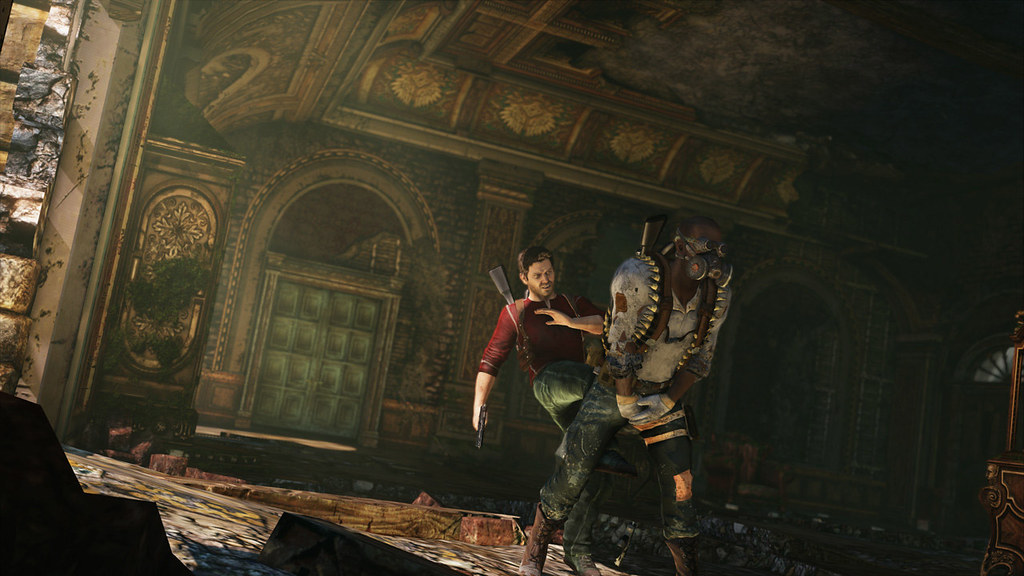
The Uncharted series and I have had a pretty, uh, complicated relationship in the past. I thought Drake's Fortune started strong, but went completely off the rails about halfway through, piling on unbalanced enemies and eventually ludicrous zombie/monster/things. I went into the multiplayer beta for Among Thieves not expecting much, and didn't find much. There was potential, for sure, but there were still "some significant issues to fix."

Mind you, none of that stopped me from beating Uncharted 2's mostly stellar single-player campaign in one ten-hour sitting later that year, but the multiplayer never managed to hook me. It had its moments, but eventually, I got bored and moved on. But that was two years ago. I just finished playing the multiplayer beta for Uncharted 3: Drake's Deception for two weeks. And you know what?

There are still some significant issues to fix.


The first thing I mentioned in my impressions of the Uncharted 2 multiplayer beta was how it took "far too many bullets to kill other players."

"Guns just don't feel powerful," I said, "and when there's as much cover as there is in the two maps included in the beta, it's too easy for opponents to slip away after taking half a clip." The game's developer, Naughty Dog, never quite fixed that in Uncharted 2's full release, and it's an issue that persisted even in Uncharted 3's multiplayer beta.

I understand the thought behind it, that making the guns do more damage would mean quicker deaths and potentially wouldn't be as fun. It's something that Twisted Metal director David Jaffe has spoken extensively about in regards to designing his upcoming game's multiplayer. He wants players to develop a relationship with their opponents before one prevails. He wants a chase. And that's a noble, applaudable goal in a car combat game.

But these are dudes running around in t-shirts we're talking about here. Time and time again in Uncharted 3's multiplayer beta, I found it far too easy to dash away and recover all my health in a few seconds if I felt outmatched. Having enough health to have the opportunity to dash away is great, but it recovers far too quickly; the game shouldn't completely reset the relationship between you and your attacker (or prey) automatically.

This is a problem that Jaffe and producer Scott Campbell seem to have nailed down for Twisted Metal. Here's what Campbell had to say about the subject to Game Informer:

One of the core mechanics that has made the franchise successful is the pickup game. When you’re running low on health, that becomes the mother of all pickups. Part of what many players will do, myself included, is explore the level and create kind of these high-speed battle circuits that incorporate where the health pickups are and just the satisfaction of getting in that circuitry and going into battle and going out to repair your car. I don’t know, I still find a lot of fulfillment when I’m a couple pixels of red away from dying and getting that last health pickup. I think it’s just such a core mechanic to the game.

Medal of Honor: Allied Assault from 2002 remains my all-time favorite multiplayer experience — a game without regenerating health. It forced you to kill other players to earn health pickups. Allied Assault was such a tense, yet balanced multiplayer experience, one where skill reigned and every encounter felt special. You didn't need "Perks" or "Boosters" or "Medal Kickbacks" to keep the experience fresh and exciting. It just was already.

I'm not trying to sound like Cranky Kong here, though. I just got a strong sense that Uncharted 3, like its predecessor, is caught somewhere between the classic style of having a health bar and pickups like Twisted Metal or Allied Assault, and the newer system of regenerating health that works best in fast, frenetic multiplayer shooters where you already have almost no health, like Call of Duty.

I'm not even saying that Uncharted 3 necessarily needs a health bar and pickups. There are modern ways of splitting the difference. Killzone 2, for example, got around this problem brilliantly by only regenerating a small portion of your health bar. In Halo, you have a shield that regenerates, but your health does not, forcing you to collect pickups. Uncharted 3 could really benefit from a similar level of forward thinking.

But that's not the beta's only problem, by any means. The melee combat system, for instance, is still the same incredibly clumsy mess it was before, sometimes allowing for really satisfying instant kills when you sneak up behind someone, but most often resulting in two players facing each other, mashing the square button, hoping to come out on top. Whoever started mashing first usually wins, but occasionally, both players end up killing each other. There's just no skill or thought to it, and I almost wish it wasn't in there at all; I'd much rather melee serve as a way to knock an opponent backwards instead.

There were a ton of different modes available in the beta, but nothing too outside the realm of what other modern shooters are doing. The most interesting mode to me was Three Team Deathmatch, a mode that pits you and one other player against two other teams of two players each.

While in the standard Team Deathmatch mode, working as a team seemed almost optional, in Three Team Deathmatch, it's the only way you're going to stay alive. When I was paired up with another like-minded player, we had no trouble cleaning up the sloppy teams who couldn't work together. When I was paired up with a player who always wanted to do his own thing elsewhere, we both got picked off easily.

The biggest change to how you actually play the game were the Boosters and Medal Kickbacks, more commonly known as Perks and Killstreaks. They really are ripped straight from Call of Duty, and while the mere sight of them when I first loaded the beta caused me to give a long, knowing sigh, lamenting the death of individuality in modern games, I still couldn't help but get sucked right back into that "only one more match and then I can buy that hella awesome Perk" mentality that defined Call of Duty 4: Modern Warfare in 2007.

Of course, that means that the game faces the Big Challenge of keeping all those perks balanced so that experienced players feel like that experience is rewarded, but not at the expense of the new players. So far, I don't think the game is doing an especially great job of that. I did noticeably worse against high-level players who had objectively better guns and abilities than me than against players at the same rank. Of course, a player with a higher rank has played longer and is probably more skilled already, but why, then, is it necessary to make their bullets do more damage, too?


Where the beta did shine, though, is in showing the potential for a multiplayer game that feels as much like Uncharted's single-player as Assassin's Creed: Brotherhood's brilliant, innovative multiplayer felt like its single-player. Brotherhood crafted a cerebral experience that forced a player to think and act like a true Assassin against equally dangerous human opponents. Instead of challenging the player's twitch reflexes or his ability to get headshots, it challenged his mind. It felt unique to the Assassin's Creed universe, unlike anything else on the market. Uncharted 3's multiplayer beta showed a glimmer of that.

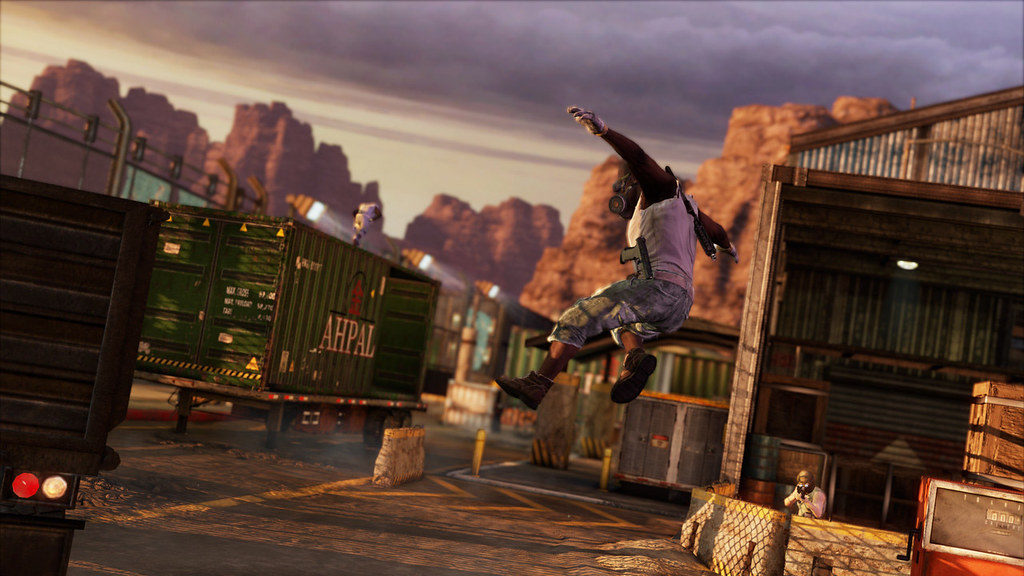
The game's Airfield map starts out with one team inside a cargo plane trying desperately to take off while under siege by the other team, who leap fearlessly between speeding trucks barreling down the runway. It calls back to a similar sequence in Among Thieves' single-player campaign, and is every bit as thrilling, from either side of the cargo hold. It's exactly what I wanted out of an Uncharted multiplayer experience. But there's no objective, and it's over after a couple minutes.

The plane takes off and then BAM! Now you're in a truck, smashing into an airfield. Huh? You're back to traditional, static multiplayer, and you wonder what the point even was, then, of that whole airplane sequence. Or at least, shouldn't it have been presented the other way around, so that you start in the airfield, then the team with more kills gets to start in the cargo plane?

Either way, it's an incredibly unsatisfying conclusion to a revolutionary idea, punctuated by the fact that I just didn't like fighting in that airfield. I vastly preferred the beta's other two maps, a burning chateau and a Middle-Eastern city with dizzying verticality.

The beta's Co-op Adventure mode gave that same glimmer, but then again, it showed no real evolution of the formula established in Among Thieves. In fact, all it really did was make me wish Naughty Dog would spend less time making generic competitive multiplayer modes that don't particularly feel like Uncharted to me and instead build a separate cooperative campaign. With such a fantastic cast of characters, it seems like a no-brainer to make a cooperative side-story focusing on Drake and one or more of his globetrotting pals who he always seems to have a long history with. It's a rich, interesting universe, and the current Co-op Adventure mode feels like it's only scratching the surface.

Now that the beta's over and I've had a few days to process it, I feel like the conclusion I've come to is that, unless Naughty Dog decides to delay the game and massively overhaul it, Uncharted 3's multiplayer probably isn't going to be for me. But hey, if they can iron out how they handle player health, that might be enough to reel me back in. Generic competitive multiplayer isn't necessarily a bad thing if it's also really fun.

Uncharted 3: Drake's Deception is set to release this year on November 1 for the PlayStation 3.


Tuesday, July 12, 2011

Is Anybody Out There?: The Journey Beta

From playing its beta, the biggest question Journey seemed to be asking me was, "how do you react to solitude?"

Skimming through the desolate, shimmering ocean of sand in Journey might feel familiar if you played Shadow of the Colossus, a game that cast the player as a young man named Wander as he explored an ancient, ruined land on a violent quest for love. The player often had to travel for long stretches in near-silence and isolation, nothing to keep him company other than his horse, Agro. And in this isolation, many players found a poignant and deeply affecting meaning to the increasing amount of blood on their hands.

While there's no indication that you'll be scaling 50-foot Colossi or engaging in anything remotely close to "combat" once Journey hits for real later this year, the game still struck the same chord in me that Shadow of the Colossus did in 2005.

Journey begins pretty low-key, with you controlling a mysterious, robed character standing in the desert. It teaches you very quickly that you can turn the camera with the SIXAXIS motion controls or the right analog stick and move with the left analog stick. It's not as immediately remarkable as developer thatgamecompany's last two games — flOw and Flower, both controlled entirely via SIXAXIS and one button — but it's much more accessible in return.

In its beta, the game relies entirely on camera cues to direct you where to go, reserving more blunt text directions for introducing control mechanics that couldn't really be explained otherwise. It's a smart system, but if you're opting for the graceful sweeps of SIXAXIS camera control, it can be a little jarring to have that control temporarily wrenched from you without warning.

So you'll trek from one dune to another, endlessly admiring the glistening sand that acts more like shallow water, until you come across the various ruins of some ancient civilization. It's your choice whether to go out of your way to explore, or just follow the critical path.

You'll get the ability to jump pretty early on, but it doesn't function like in most games. Here, you have to earn each jump by finding floating scraps of cloth. And if you search out collectable white orbs, your character's scarf will grow longer and you'll be able to jump higher. It's an odd system, and I'm not sure how much it adds yet.

But that's the point. At its core, Journey is a game that's all about limitations: limitations in your control, limitations in your character's abilities, limitations in your interactions with the world around you. Like Shadow of the Colossus, you're almost always deprived of any surrounding life. Unlike Shadow, though, where the player formed an active bond with Agro and an inactive one with Mono, Wander's unconscious lady love, in Journey, you're totally alone.

And that's where it gets interesting. In theory, anyway.


Journey's big promise is in how it starves you for human connection. It'll pair you up with another player — you won't know who — and you'll be able to travel with him, or ignore him completely until he's removed from your game automatically. You can only communicate with that player via a "sing" ability where your character makes a noise and briefly emanates a white, ethereal glow.

Unfortunately, in the beta, thatgamecompany was only turning on the multiplayer at certain times, so I was never able to push through the hot sands with a companion. Instead, I was left with questions of how the system will work. For instance, can you boot the other player out if you don't like him? Will he be able to trigger cutscenes before I'm ready to move on? Will we be able to reach areas one player can't? And most importantly, how will another human player, an agent of chaos in an otherwise controlled, scripted world, change the emotional experience?

Journey's big promise is in how it starves you for human connection.

What I'm sure of, though, is how jarring it is to see anything resembling a living creature in Journey. In one part of the beta, I came across a kind of red kite that came to life when I approached it. It picked me up for a moment, almost playfully, before swooping away and diving into the sand. It emerged a little farther away, swimming through the sand as naturally and elegantly as a dolphin through water. It seemed to be beckoning me to follow. So I did.

It ushered me over dune after dune, and I slid down each one, racing along to catch up. Finally, we arrived at another set of ruins, where I gave life to four smaller kites. One picked me up as the rest circled, then we all took off on our next adventure. I wasn't alone anymore, and it felt invigorating. They led me to a white upgrade orb, then we kept moving, the music picking up and getting a lively bounce. But the ground rumbled for a moment, and my new friends rushed ahead.

I panicked, watching them dart over the horizon and out of sight. As I finally reached the top of the dune, I saw little red specks fly upward into a darkening sky, and I knew I was alone again.

This is the part of Journey that intrigues me the most. That it so quickly got me to feel a connection to these odd little kites is extremely promising for the rest of the game. Exploring the cracked, dry ruins of an old civilization and making my way to the glowing mountain looming in the distance were definitely intriguing aspects in this short beta, but my relationship with the pieces of the world still retaining a spark of life was far more compelling.

Journey is scheduled to release later this year for the PlayStation 3.


Wednesday, June 29, 2011

Review // Alice: Madness Returns

If you were to make a game about Alice exploring a twisted, violent version of Wonderland, what kind of game would it be? A standard platformer and brawler? I'd hope not, though that's exactly what developer Spicy Horse chose to make. But what's done is done, so what's it like to hop around their dark, demented Wonderland?

It's so boring.

Can I Return The Madness Without A Receipt?

As I see it, there are two big reasons for that. The first is the complete lack of imagination in what, exactly, you're doing in Wonderland. Every action you'll take can be broken down into one of three categories: Platforming, combat, and puzzle-solving, none of which the game does particularly well.

The platforming is pretty dull by modern standards, and quickly falls into a very mechanical routine. You'll jump from one floating platform to the next, sometimes riding air currents up, until you get stuck and have no clue where to go next, but the solution is always the same: find a lever to pull or a switch to hit. Then you keep going. There's nothing particularly interesting or fun about it, and it feels like a chore most of the time.

There's nothing particularly interesting or fun about it, and it feels like a chore most of the time.

Fighting against angry playing cards, ghost pirates, and samurai wasps fares a bit better than the dusty platforming, but it suffers from being a little too mindless, a little too button-mashy, and a little too imprecise. The fact that it's also more difficult than you'd want it to be only compounds those problems. Pretty early on, I turned the difficulty down to easy so I could just burn through it faster. I don't even really understand why it's thematically relevant to turn Alice into Kratos Jr. in the first place; it's as out of place for Alice to be engaging in a typical hack-and-slash as it was last year for Dante.

And the puzzle-solving, if you can call it that, is just so mind-numbingly easy that it becomes nothing more than busywork to do between platforming and fighting. Sometimes, you'll have to rearrange a scrambled picture, but only after you arbitrarily collect the parts first. Other times, you'll move pieces on a chess board. They're more tedious than anything else, but as a break from the rest of the game, they're passable.

The second reason why Alice is so boring is that it just goes on and on and on. After the first couple hours, you'll have seen pretty much everything Alice has to offer, but Spicy Horse had no grasp of when enough was enough. It doesn't matter what crazy, visually distinctive backdrop the game has you moving through, you'll be doing the exact same stuff on all of them. There are enough ideas in Alice to make it a unique and quirky six to eight-hour experience, but instead, Spicy Horse spreads those ideas thin for over 20 hours, forever cementing the argument that a game's length has no bearing on its value; it's the quality of the experience that matters, and Alice: Madness Returns is absolutely dreadful.

Mad As A Hatter? If Only

It would seem that the draw, then, would be Alice's unhinged sense of style. And sure enough, that's probably the only redeeming thing about the game. At times, when Alice's world opens up and gives you a crisp, colorful vista to look at instead of a dim, featureless corridor, Wonderland can be a strange and alluring place. The scenery I enjoyed most, for example, had me jumping along giant playing cards in the sky that appeared out of nowhere, leading me through the clouds to floating castles of cards.

And yet, that section was over after about 10 minutes, representing the one and only time the game didn't wait until I had already been sick of an environment for at least an hour before finally refreshing the scenery.

Alice's story moves at a snail's pace, and suffers for it.

Truth be told, since so much of the game had me trudging through banal, monotonous caves, without the Cheshire Cat popping in every once in awhile, I probably would've forgotten that it was set in Wonderland at all. It's the loosest of associations, defined mostly by brief cameos from gnarled caricatures of faces you'll recognize. So for me, Alice's humdrum version of Wonderland was not a draw at all.

The tale woven in this Wonderland is far less interesting than it should've been, again crippled by a severe lack of creativity and a misguided need to stretch the game's length well beyond reason. Alice's struggle to remember her repressed memories of her family's death by fire, forcing a mental retreat into a Wonderland in shambles, should be fascinating, and at times, it is. But it became much harder for me to care when every time I'd meet new character, the first thing he'd do is send me on several hours-long fetch quests at once. Alice's story moves at a snail's pace, and suffers for it.

What also made it difficult to appreciate the story were the between-level cutscenes that, while gorgeous and gleefully aberrant, had such awful sound mixing that I had to turn subtitles on to hear anything that characters were saying. Weird technical issues like that cropped up throughout the game and really detracted from the experience, like getting stuck in the level geometry and needing to restart the game. Or odd hitches where the game would freeze for a moment whenever I'd pick up one of Alice's collectable memories. Or the inconsistent framerate that made the few music-based timing challenges almost impossible.

It's stunning to me that a game set in Wonderland can be so unimaginative. What should have been a delightfully bizarre and psychedelic experience ended up being an all too sobering example of why games shouldn't be padded out.

Alice: Madness Returns / $59.99 / PS3 [reviewed], 360, PC

Thursday, June 23, 2011

Review // Mortal Kombat

Wow. I know it's a bold statement to make, but I think Mortal Kombat might be the most fun fighting game ever made. Well, offline, anyway.

Two Sides Of A Very Bloody Koin

Now, I'm sure fighting game purists could say that my bold statement is also a foolish one because Mortal Kombat isn't as deep or technical as [insert fighting game here], but that's precisely what works for it. It's immediately accessible in a way that not even Street Fighter has been able to nail despite two decades of "quarter-circle forward, punch" being burned into our brains. Inputs are simple, fast, and easy to string together, so you don't need to a be a pro to feel like one. It's incredibly refreshing.

That doesn't mean that Mortal Kombat lacks depth, though. It borrows the familiar super meter mechanic from Street Fighter IV, but swaps Supers and Ultras with X-Ray attacks that look awesome and are smartly effortless to pull off. And hey, if you really want to hop into the training mode and work out long combos and mess with damage percentiles, by all means, go ahead; it's super satisfying to finally nail that ridiculous combo you've been working on and bring it into a real match. That depth is there if you want it; you just get out of it what you put in. The game treats both casual and high-level play with equal respect, and is all the better for it.

So, when we're talking about sitting on the couch with friends and lots of trash talking, Mortal Kombat is phenomenal. On the flip side, the online multiplayer experience is one of the worst I've ever had. If you're lucky enough to connect to a match, prepare for an unplayable, unresponsive mess. Lag pervades every aspect of the experience, even the character select screen. The developers keep promising some magical patch to fix everything, but it's already over two months too late for me. As far as I'm concerned, Mortal Kombat doesn't even have online play.

In A Klass Of Its Own

Even though it completely drops the ball for online multiplayer, Mortal Kombat makes all other fighting games look incredibly lazy when it comes to the single-player side of things. First, the game totally reinvents how to present a fighting game's story in such a logical way that it's baffling to think it took this long for someone to do it right. It plays out like a movie most of the time, until a fight naturally breaks out, then the camera just spins around to the familiar perspective and the announcer says, "Round 1. FIGHT!" The story being told isn't exactly high art, but the way it's presented is nothing short of a revelation for the genre. All future fighting games need to follow suit.

Next, the sheer amount of content is staggering. That story mode will take you around eight hours to finish and is entertaining enough, but there's also the classic arcade tower for every character, the introduction of tag team battles, a ridiculous amount of bonus unlockables, and the Challenge Tower that has 300 creative, increasingly difficult challenges for you to work through. Personally, I got burned out after about 50 of them, but I'm still glad it's there. Regardless, I've never seen a fighting game with this much content.

What I love most about Mortal Kombat, though, is just how much heart it has. Everything in it comes across as a labor of love for the developers, from all the inside jokes and references to its long legacy, to the imagination in the Fatalities, to crazy modes like Test Your Luck that lets you end up with matches where you might have no arms, or the screen is upside-down, or you have no arms. The game recognizes and embraces how absurd it all really is, something I wish more games could do these days.

I fell in love with Mortal Kombat when I started playing it, then out of love with it, hard, when I tried to play online. As an offline experience, it can't be matched, completely worth every dollar and every hour. But online? What a missed opportunity.

Mortal Kombat / $59.99 / PS3 [reviewed], 360